
Caribbean Sailing Areas Compared
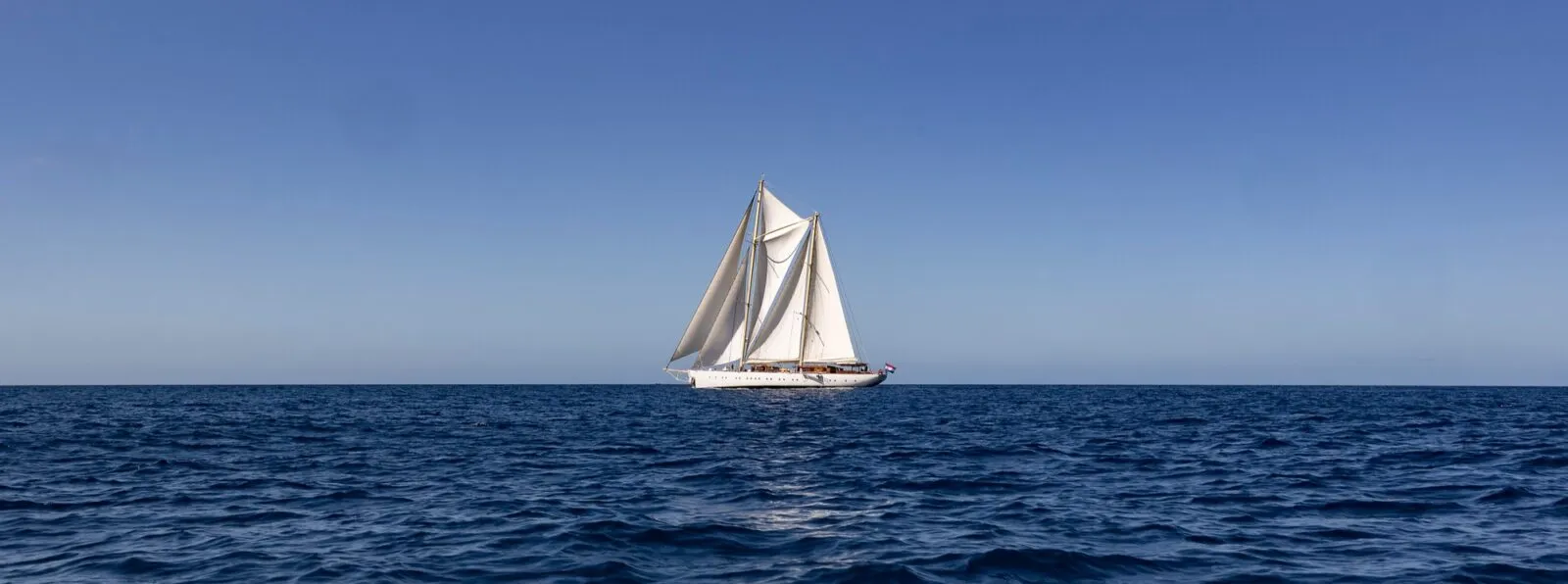
Which Caribbean sailing area suits you is not determined by your sailing skills, but by your preference. On board sails an experienced crew. Sailing-Classics visits four areas of the Lesser Antilles: the British Virgin Islands, Antigua and Barbuda, Martinique, and the Grenadines. Sailing takes place from December to April, usually four to six hours a day.
Which Caribbean Area Suits You Best?
The four Caribbean sailing areas differ less in quality than in the character of the journey. The decisive factors are primarily the conditions on the water, life on land, and the length of the journey. In the British Virgin Islands, the islands lie so close together that sailing is usually done within sight from one to the next. In the Grenadines and around Martinique, the stages are longer, and the influence of the Atlantic is more noticeable. Thus, the choice of area mainly determines the atmosphere and sailing experience, not the comfort of your trip.
What All Four Areas of the Lesser Antilles Have in Common
When sailing in the Lesser Antilles, you are moving within an island arc that stretches from the Virgin Islands in the north to Grenada in the south. The British Virgin Islands and Antigua lie in the northern part, Martinique and the Grenadines in the southern. All four share the northeast trade wind, which, according to our experience, blows about nine out of ten days during the season — making predictable sailing possible everywhere here.
The season is also the same. We sail from December to April, during the dry season and outside the hurricane season. More details on months, wind, and weather can be found in the overview of the best travel time for a Caribbean sailing trip.
And one more thing is the same everywhere: the yacht, the crew, the cuisine on board.
British Virgin Islands (BVI) for Your First Caribbean Cruise
The British Virgin Islands are considered a particularly beginner-friendly sailing area in the Caribbean. More than 60 islands lie so close together that sailing is often done within sight from one to the next. The protected island arc ensures comparatively calm seas, the trade wind usually blows moderately, and the individual stages remain pleasantly short.
This makes the BVI especially suitable for a first Caribbean cruise, for trips with children or older companions, and for those who prefer extended swimming stops to long sailing distances. One of the best-known highlights is The Baths on Virgin Gorda, where turquoise water forms natural pools between massive granite boulders.
Those seeking primarily peace and seclusion should choose a different area. The British Virgin Islands are the liveliest of the four sailing regions. However, the infrastructure on land is particularly versatile. Restaurants, bars, and easily accessible anchorages make the area ideal for those who want to combine sailing with sociable evenings. The Grenadines offer more tranquility.
Antigua and Barbuda for Classic Sailing and Dream Beaches
Antigua combines relaxed beach days with a long maritime tradition. The protection of English Harbour was already demonstrated in 1723: while a hurricane drove 35 ships ashore in other harbours on the island, two ships in the bay remained undamaged. Later, a Georgian shipyard complex was established here, still in use today and designated as Antigua Naval Dockyard, a UNESCO World Heritage Site since 2016.
According to tradition, Antigua has 365 beaches, one for each day of the year. Whether there are actually that many has probably never been precisely counted. Some of the longest and quietest beaches are found on Barbuda, about 45 kilometers from Antigua and mostly nearly deserted. An overview of the routes can be found on our page about the sailing trip around Antigua.
Martinique for French-Creole Diversity and Longer Sailing Stages
Martinique, Guadeloupe, and Dominica form the most varied of the four sailing areas. At the markets of Fort-de-France, French and Creole influences meet, as they do in the island’s cuisine. Dominica, with dense rainforest, rivers, and hot springs, offers a striking contrast. Between them lie the Îles des Saintes with their protected bays and charming anchorages. The area is especially suitable for those who want to experience land, culture, and nature intensively alongside sailing.
On the water, conditions are somewhat more demanding than in the British Virgin Islands. The stages between islands are longer, the trade wind blows stronger, and the Atlantic swell is more noticeable on open passages. This creates a particularly lively sailing experience without requiring you to actively sail, as the crew safely navigates the yacht through the area. Those sensitive to stronger ship movements will usually find calmer conditions in the British Virgin Islands.
The Grenadines for Untouched Nature and the Best Snorkeling Spots
The Grenadines are considered the most pristine of the four sailing areas and are especially appealing to nature lovers. The island chain stretches from Grenada over St. Vincent to the north; St. Lucia is not included. Its heart is the Tobago Cays Marine Park: a 5.7 square kilometer lagoon with five uninhabited islands. Four of them lie protected behind the approximately four-kilometer-long Horseshoe Reef, which blocks much of the Atlantic swell and provides calm anchorages. Green sea turtles can often be observed in the protected zone in front of Baradal.
Away from the well-known anchorages, the area often feels quiet and unspoiled. However, in high season, Baradal can become noticeably busier when numerous boats anchor there. Large, lively harbours are rare in the Grenadines. Since the Tobago Cays are only accessible by boat, visitor numbers remain manageable. Along the Grenadines are some of the most beautiful beaches in the Caribbean.
Which Area Suits Which Type of Traveller
| Type of Traveller | Recommended Area | Why It Fits |
|---|---|---|
| First Caribbean Trip | British Virgin Islands | protected waters, stages mostly within sight |
| Connoisseurs | British Virgin Islands | short distances, best infrastructure on land |
| Nature Lovers & Snorkelers | Grenadines | Marine Park, coral reefs, turtles |
| Culture & Cuisine | Martinique | Creole markets, rainforest on Dominica |
| Beach Days & History | Antigua and Barbuda | World Heritage shipyard, beaches on Barbuda |
| Families | British Virgin Islands, Antigua | short stages, many swimming stops |
| Solo Travellers | all four areas | the atmosphere is created on board, not in the area |
| Returnees | Grenadines | quiet anchorages away from known routes |
Many guests identify with several types of travellers. This often makes the choice easier, as the transitions between areas are fluid. Those who appreciate nature and culture equally will find suitable experiences both in the Grenadines and around Martinique.
For solo travellers, the choice of area plays a rather minor role. The personal atmosphere is created mainly on board, where depending on the yacht, a maximum of 16 or 26 guests travel together. And if two areas are equally appealing, they can be combined on selected multi-week routes, for example from St. Martin to the British Virgin Islands or from Martinique to the Grenadines. Which route best suits your preferences can usually be quickly determined in a personal conversation.
Travel and Entry as an Underestimated Decision Criterion
The effort for travel differs significantly depending on the area and can be as important in choosing the cruise as landscape and sailing conditions. Antigua is reachable by nonstop flight during the winter season. Condor flies on Tuesdays in about ten hours from Frankfurt to the island. Martinique is well connected to Fort-de-France with a transfer in Paris.
There is no direct connection from Europe to the British Virgin Islands. Travel usually goes via St. Martin and from there with a smaller propeller plane. Depending on the connection, the total travel time is about 11 to 16 hours.
There are also differences in entry requirements and currency. Martinique and Guadeloupe are French overseas departments, part of the European Union, and use the Euro. The British Virgin Islands use the US dollar. Antigua and Barbuda as well as St. Vincent and the Grenadines use the East Caribbean dollar.
Regardless of the area, you should carry a passport valid for at least six months beyond the end of the trip. For an exclusive stay on the French islands, an identity card is generally sufficient. However, as soon as the route passes through St. Martin, a passport is required. When traveling via Puerto Rico, US transit regulations must also be observed. The current travel and safety advice from the Foreign Office is always decisive.
The Choice of Area Does Not Depend on Your Sailing Experience
On a Caribbean sailing trip with skipper, your personal wishes, not your sailing experience, determine the choice of area. The yacht is operated by an experienced crew, consisting of seven to ten members depending on the ship, caring for a maximum of 16 or 26 guests.
On board, the principle is “everything can, nothing must.” You can take the helm yourself, help set the sails, or simply enjoy the sailing experience in a relaxed way. The crew also supports you during shore excursions. Trips are organized and, depending on the program, accompanied by a crew member or a local guide. This allows even more remote areas to be explored comfortably. Further insights into the daily routine can be found on our page about life on board.