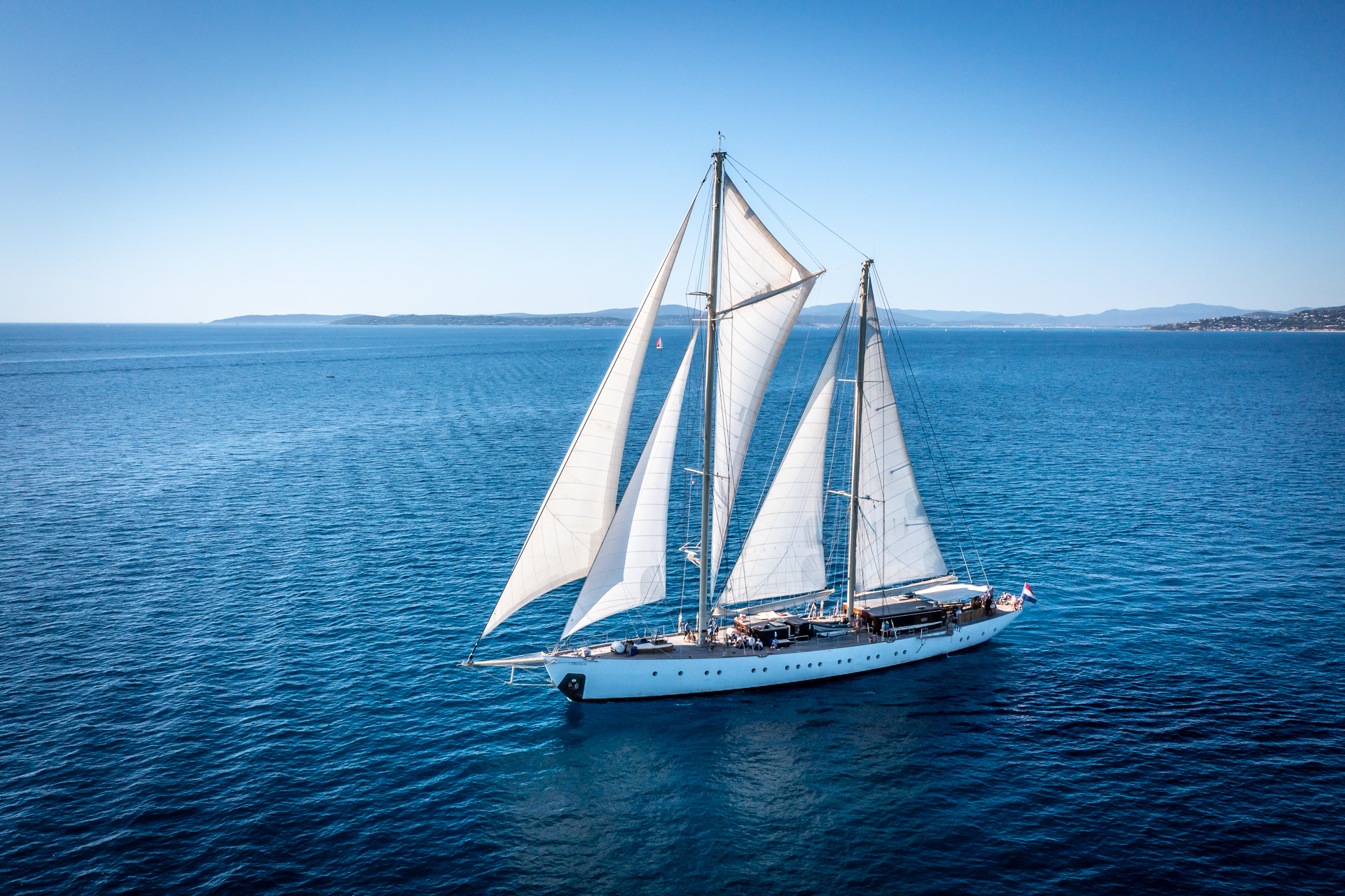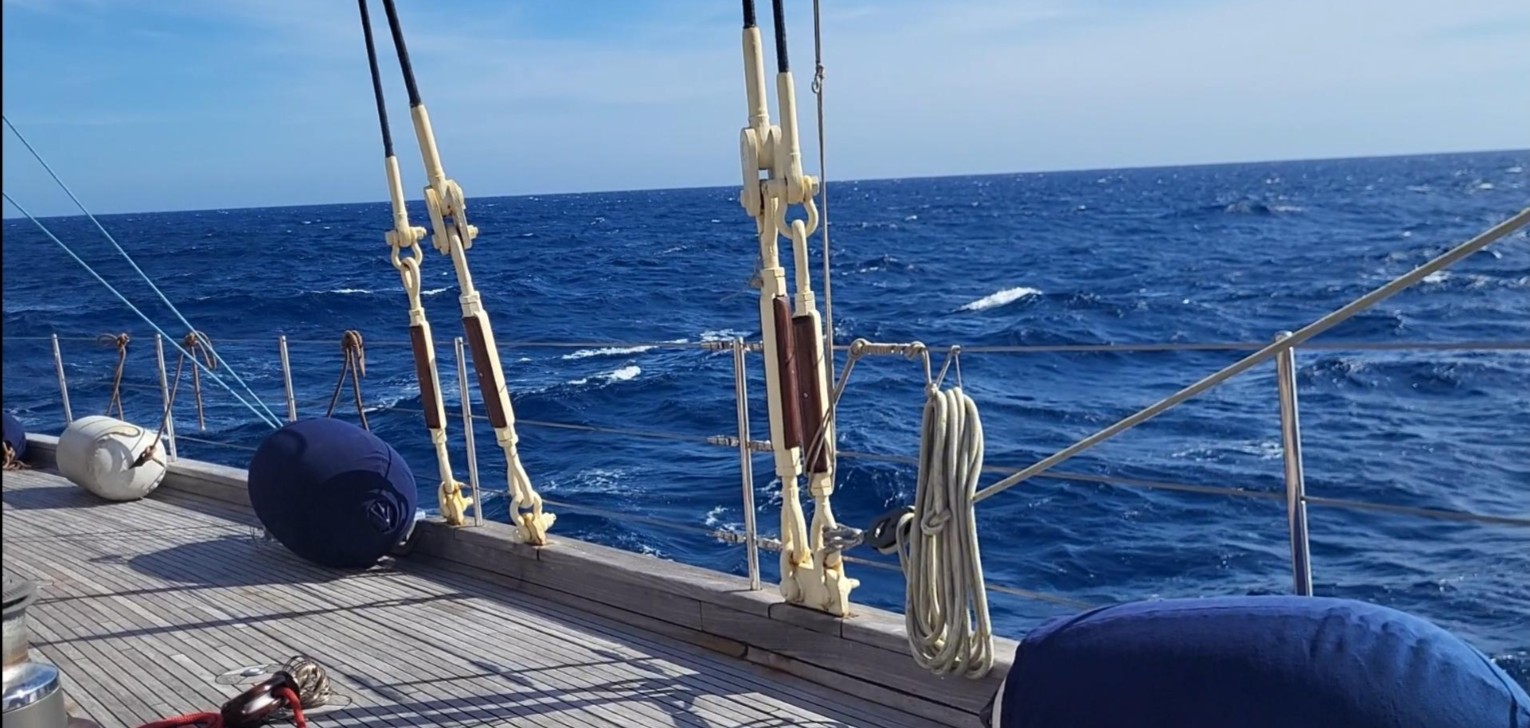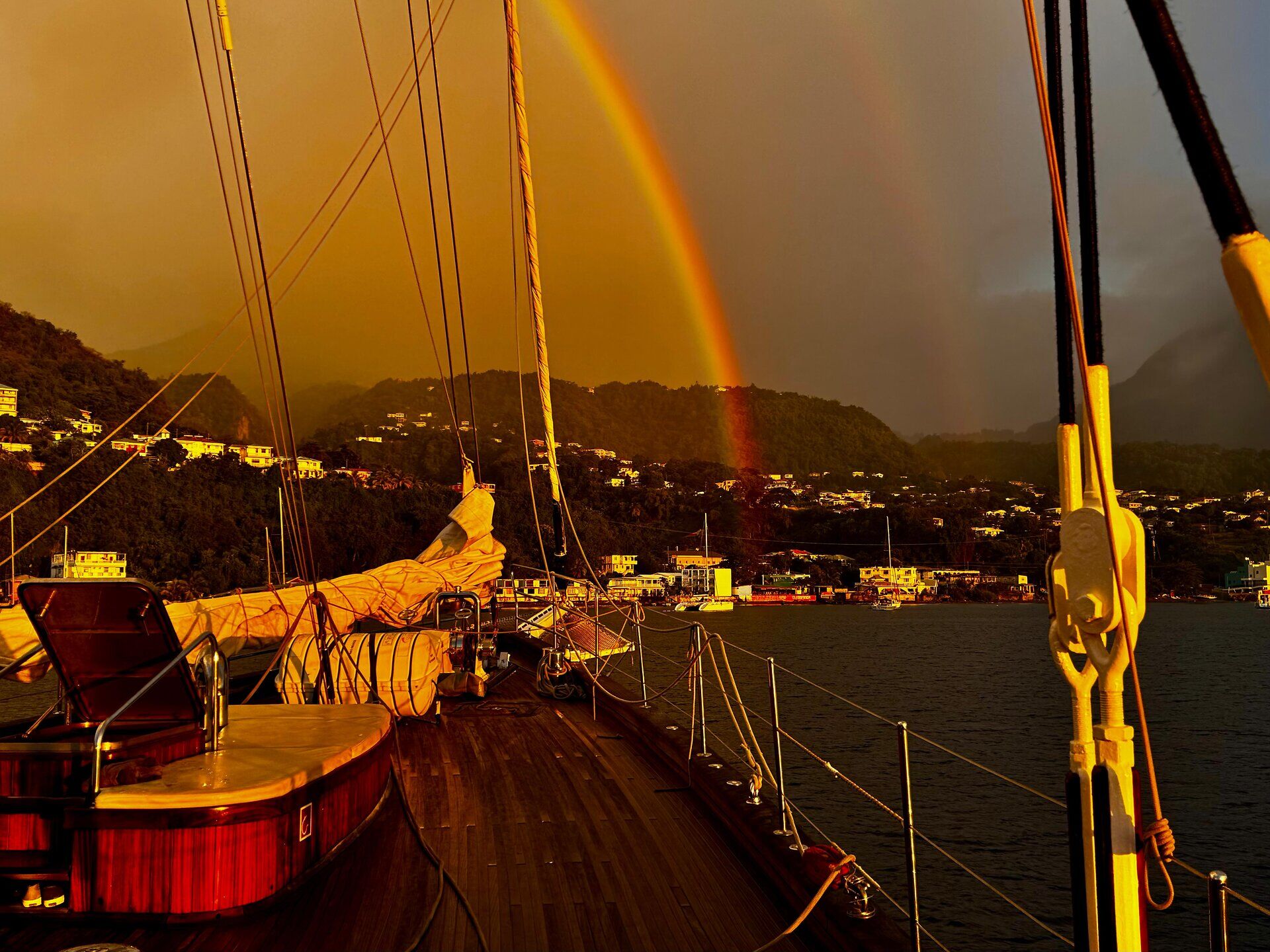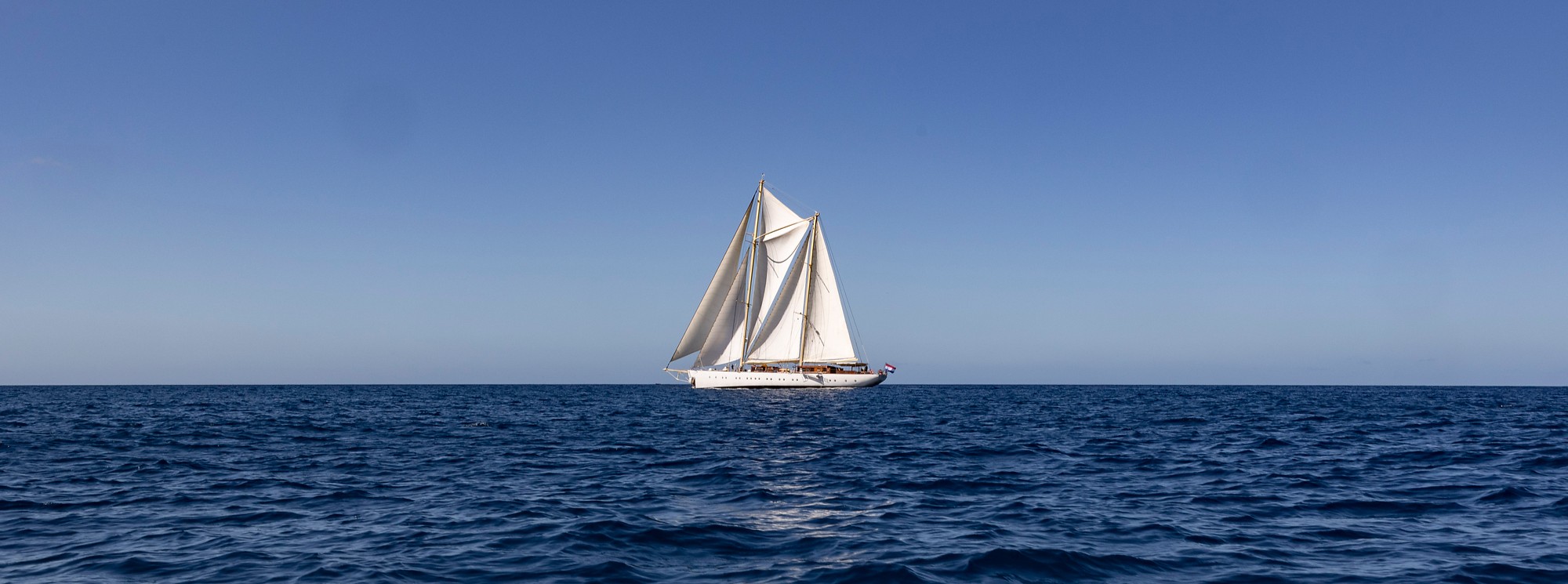
For many, crossing the Atlantic on a sailing ship is the fulfillment of a lifelong dream; in any case, it is an experience that you will not soon forget. A classic Atlantic crossing under sail is a journey between the Canary Islands or Cape Verde and the Caribbean and vice versa from the Caribbean to Europe, during which sailors cover several thousand nautical miles on the open sea. The popular barefoot route starts, for example, on the Cape Verde island of São Vicente or Tenerife and ends in Martinique or Antigua in the Caribbean. A great Atlantic crossing from the Caribbean to Europe takes you on the west-east route or north route, e.g. from Antigua to Gibraltar.
You can look forward to plenty of vitamin D along the way. The Atlantic regions benefit from plenty of sunshine – 300 days of sunshine per year are not uncommon in the Canary Islands and the Caribbean. Even more important for sailing, however, is the wind, which largely determines the route, speed and safety of an Atlantic crossing. On the classic trade wind route towards the Caribbean, the north-east trade wind blows constantly at 15 to 25 knots between November and January, which enables calm, predictable downwind sailing. For the return crossing in April and May, sailors take advantage of the westerly wind zone, which often enables rapid progress. Due to low pressure systems and generally changeable conditions, navigational skills and flexibility are required when crossing the Atlantic in this direction. With the experienced crews of Sailing-Classics, you are in the best of hands.
An Atlantic crossing is suitable for experienced sailors looking for an intensive ocean sailing experience, but also for sailing enthusiasts or beginners who want to get to know the open sea in a small group. Families with older children, couples, friends or solo travelers who want to combine adventure with comfort will find ideal conditions on a trip with Sailing-Classics. A competent briefing, experienced sailing professionals as crew and high-quality on-board equipment ensure safety, confidence and a relaxed experience on board.
The Atlantic can be crossed by sailing yacht via various routes, some of which are more challenging than others. The exact passage can also vary and ultimately depends on wind and weather conditions. Depending on the time of year, wind conditions and personal requirements, a crossing of the Atlantic can therefore take different routes.
The classic “barefoot route” is the east-west passage across the Atlantic, which takes you from a port of departure such as Tenerife in the Canary Islands or São Vicente on the Cape Verde Islands to the Caribbean. This route makes use of the constant north-east trade winds and is considered the most uncomplicated, weather-stable Atlantic crossing. Long, steady legs under trade winds ensure a relaxed and pleasant sailing experience.
This route describes the west-east crossing, which is nautically more challenging than the barefoot route. It starts in the Caribbean, for example in Antigua, then heads north-east across the Atlantic, often as far as the Azores, for example to Horta on Faial. Depending on the weather conditions, the route continues towards Europe, for example to the Mediterranean or Gibraltar. Due to the westerly winds, the northern route requires active sailing and constant weather observation, which makes it more exciting for experienced sailors than other routes.
The trade wind route does not describe a fixed route, but a technical wind concept for sailing with the trade winds on east-west routes. It makes use of the constant trade winds between November and January, which enable predictable downwind sailing. In practice, the trade wind route often coincides with the barefoot route, just as the wind points the way.
In addition to the classic long-distance routes, shorter Atlantic passages are also possible, e.g. from the Azores to Portimão in Portugal or from Gibraltar to Cape Verde. These crossings are ideal for slowly feeling your way around and gaining ocean sailing experience before embarking on longer Atlantic passages.

Crossing the Atlantic on a sailing yacht takes different lengths of time depending on the route. For a challenging major Atlantic crossing under sail, for example from Antigua in the Caribbean via the Azores or directly to Gibraltar, around three weeks should be planned. The easier barefoot route from the Canary Islands or Cape Verde to the Caribbean takes around two weeks. Smaller crossings, such as from Gibraltar to Cape Verde or from the Azores to Portugal, can be completed in one to just under two weeks.

The trade winds are important for an Atlantic crossing with a sailing ship, as they ensure that the wind conditions are constant in many parts. Of course, weather conditions vary on such a long crossing, so it is important to ensure maximum comfort when sailing by choosing the right travel time.
The ideal travel time depends heavily on the route: While the classic Atlantic crossing from Europe to the Caribbean takes place between November and January with stable trade winds, the optimal time window for the return crossing towards Europe is in spring.
Our Sailing Classics Atlantic crossings start in April and May – a time when stable weather windows form in the North Atlantic and conditions are ideal for the more challenging west-east route. This route requires more navigational skill and flexibility, but rewards you with a particularly intense sailing experience far from the classic trade wind route.
| Route | Ideal period | Wind conditions | Sailing experience | Perfectly suited for |
|---|---|---|---|---|
| Barefoot route: From Europe to the Caribbean |
November to January | Constant northeast trade winds | Calm downwind sail, easy to plan | Beginners, connoisseurs |
| Northern route: From the Caribbean to Europe |
March to May | Changing weather systems, westerly winds | Demanding, active, navigationally exciting | Experienced sailors, adventure seekers |
With a maximum of 26 guests and a crew of 7 to 10, a personal atmosphere is created on board – at dinner, during a sundowner together on deck or during informal conversations in between. On the last evening, the captain invites you to the Captain’s Dinner, where you can review the journey together and enjoy the excellent cuisine one last time in an elegant ambience.
No matter which yacht you are traveling on: Each has its own character. The CHRONOS and the RHEA offer plenty of space, comfort and an elegant ambience, while the slightly smaller KAIRÓS stands for a particularly personal experience with fewer guests. Here you can make the most of your own sailing experience. Sailing on the Atlantic is a particularly natural and sustainable way to travel. The wind is the most important driving force, and great importance is attached to respecting the marine fauna when anchoring.
Crossing the Atlantic is a particularly intense experience and challenging even for sailing professionals. Nevertheless, you can go on board without sailing experience, as our professional, experienced crew will guide the sailing yacht safely. If you have sailing experience and would like to actively help out, you are welcome to do so. As a guest, you can, for example, help set and trim the sails, be assigned to watches and even take the helm yourself. But: anything goes, nothing is compulsory – there is absolutely no obligation.
Are you an active sailor? Then you will get your money’s worth with Sailing-Classics, especially on challenging trips such as Atlantic crossings, when sailing is more intensive and also at night. Some trips are marked as transfer trips; here the focus is on sailing and less on comfort or fixed procedures on board, but you can really lend a hand.
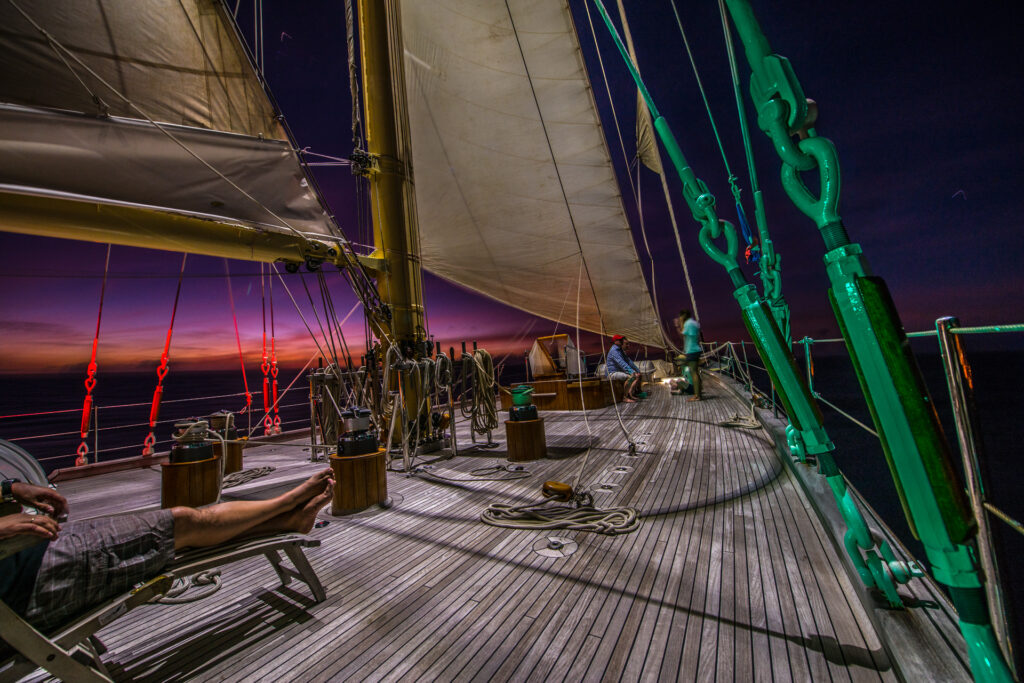
An Atlantic crossing with Sailing-Classics combines nature-loving ocean sailing with style, comfort and professional, personal guidance. You travel on board an elegant large yacht and are looked after by the professional nautical crew, who will introduce you step by step to life under sail. Sailing experience is an advantage, but not a prerequisite.
The journey to the starting point of your Atlantic crossing is by plane, for example to the Azores or Cape Verde via Lisbon or to the Caribbean via international hubs such as London or Paris.
Embarkation usually starts at 6 p.m. on the day of arrival. After a detailed briefing in the port, you will set off together on the crossing, which will take several days to weeks on the open Atlantic, depending on the route. Along the way, active sailing phases, shared meals, relaxing hours on deck and occasional swimming breaks alternate, during which you immerse yourself in the waves in the middle of the open sea. Weather and wind dictate the daily rhythm, and this is precisely what makes an Atlantic crossing so uniquely appealing, as is the feeling of being in harmony with nature far away from civilization.
Thanks to small groups with a maximum of 26 passengers, a personal atmosphere and high-quality equipment on board, you will experience the Atlantic intensively, safely and comfortably – far away from mass tourism, in a sustainable way and in the best hands. On the last day at the Captain’s Dinner and back in port at the latest, you can celebrate the shared experience.
You should always plan your return flight with a buffer of one to three days to allow for weather conditions that can affect the actual duration of a cruise. However, we recommend adding a few more days of vacation with solid ground under your feet anyway and getting to know the beauty of the Caribbean on land, for example.
Discover our sailing adventures on the Atlantic
stylish, authentic, unforgettable
An Atlantic crossing on a sailing ship is an unforgettable experience, an adventure that excites sailing enthusiasts and globetrotters alike. So that you can really enjoy your time on board, you should enjoy sailing together as a team on the high seas and actively shaping life on board for several days. It doesn’t matter whether you are an experienced sailor, a motivated beginner with a desire for practical experience – or just want to watch and perhaps learn something new. The important thing is that you are open to an intensive sailing experience and life on the high seas.
Which route suits you best depends on your personal preferences.
In principle, you should be in good health to spend several days at sea and have no problems with rough seas and movement on deck. Team spirit and flexibility on board are also welcome, as weather and wind conditions influence the daily routine. If you have already gained some experience on shorter ocean cruises or training cruises, this is all the better, but not a prerequisite.
When booking your trip with Sailing-Classics, pay attention to how the cruise is classified. On a transfer voyage, the focus is on sailing – or active assistance. Depending on the route and time of year, a so-called “Medical”, a certificate of fitness for sea service is required, the service may be restricted and swimming breaks may be canceled.
The safety of guests on Sailing-Classics yachts is our top priority. The ships comply with the latest safety standards. The captain and helmsman are graduates of the professional nautical school and regularly undergo further training. The rest of the crew is also intensively prepared for emergencies. All guests receive a detailed safety briefing at the start of each trip, and sea rescue drills are also carried out so that you are fully prepared. The route is flexibly adapted to weather and wind conditions to ensure maximum safety and comfort.
Even if you are traveling alone, you are very welcome on board our yachts on an Atlantic crossing. Thanks to the manageable group size, the atmosphere is personal and there are plenty of opportunities to get to know fellow travelers at occasions such as the shared sundowner or dinner.
On an Atlantic crossing with Sailing-Classics, you are fully catered for. Included are the costs for the experienced nautical crew and attentive service, accommodation on board in the comfortable cabins with air conditioning, sea transportation, full board on board including Captain’s Dinner on the last evening as well as drinks, water, tea and filter coffee.
Arrival and departure, transfers, drinks such as soft drinks or alcoholic beverages and tips are not included.
The classic long-distance routes, such as the barefoot route from the Canary Islands/Cape Verde to the Caribbean, usually take place between November and December, when the trade winds are stable. The return crossing from the Caribbean to Europe on the northern route is carried out in spring, from March to May, when favorable weather windows form.
Smaller crossings, for example from Gibraltar to Cape Verde or from the Azores to Portugal, always take place before or after the major crossings.
The experienced crew of Sailing-Classics ensures that every Atlantic crossing is carried out safely and comfortably, regardless of the time.
Discover our special offers for solo travelers in the Caribbean:
🎉Christmas & New Year’s Eve without single cabin supplement
🏝️Bis 31.03.2026: half single cabin supplement on all Caribbean voyages
⛵Tip: Combine two weeks and secure a multi-week discount