
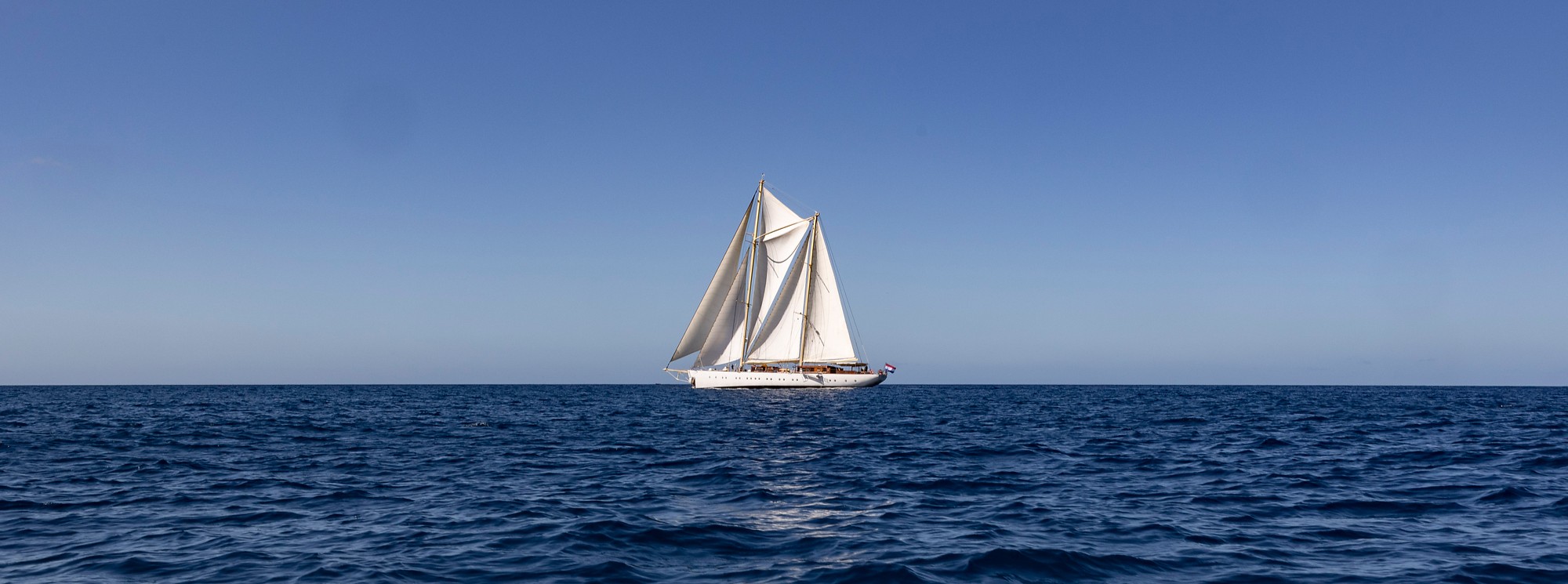
The main differences between a sailing trip in the Caribbean and one in the Mediterranean Sea concern the season, wind conditions, the nature of life on board, the landscape, culture, port infrastructure, and the underwater world. While sailing in the Mediterranean Sea takes place from April through October, the Caribbean season begins in December and lasts through May. The two sailing regions thus complement each other almost perfectly to create a year-round sailing calendar. When hurricane season begins in the Caribbean, the Mediterranean winds take over until the dry season in the Caribbean once again provides perfect conditions.
In the Caribbean, during the high season, the steady northeast trade winds reliably blow across the turquoise waters 9 out of 10 days at 4 to 6 Beaufort, while in the Mediterranean Sea, the Meltemi and Mistral define island hopping among olive groves, hidden coves, and millennia-old harbors.
The Caribbean or the Mediterranean Sea or both? This article provides you with a solid basis for making a decision and explains why these two destinations are not mutually exclusive but rather complement each other well.
A brief summary of the 6 differences:
Which world is right for you depends primarily on the time of year you’re traveling, the kind of onboard experience you’re looking for, and your preferences regarding climate and culture.
The sailing season in the Mediterranean Sea runs from April to October, and the Caribbean season from December to May. These two sailing regions thus complement each other to create a nearly seamless year-round sailing calendar.
During the peak season of the Mediterranean Sea in the summer months of June through August, it gets hot, with air temperatures ranging from 25 to 35°C. At this time of year, there are a great many sailing yachts on the water. In the off-season, however—in May, September, and October—there are often fewer boats out on the water, and temperatures are milder. One advantage of traveling during this time of year is that mooring fees are often lower. From November through March, when winter brings rain and cool weather, the Mediterranean Sea is not a typical charter destination. Sailing trips are rare during this period.
Temperatures in the Caribbean range from 22 to 31°C year-round, but the best time for sailing in the Caribbean’s sparkling turquoise waters is during the dry season, from December through April. When the hurricane season ends, the trade wind season begins. That’s when the region offers ideal weather—sunny, with hardly any rain and steady trade winds. May is considered a transitional month, and the number of sailing trips decreases. According to the official window from the National Hurricane Center, the hurricane season begins on June 1 and ends on November 30, peaking in August and September. Organized sailing trips typically do not take place during this time.
Anyone who wants to explore both regions should plan a summer vacation on the Mediterranean Sea and a winter getaway to the Caribbean.
In the Caribbean, the northeast trade winds blow on about 9 out of 10 days at 4 to 6 Beaufort, providing the most reliable sailing conditions of all major sailing regions. As a result, Caribbean cruises are often more consistent and relaxed, while Mediterranean cruises vary greatly in difficulty depending on the region—for example, the Cyclades versus the Adriatic versus the Tyrrhenian Sea.
Typical challenges in the Caribbean include locally strong winds at island headlands and short, powerful squalls, while sudden and sometimes extreme wind events can occur in the Mediterranean Sea.
In the Caribbean, the trade winds blow steadily from the east to the northeast at 14 to 22 knots, with stable atmospheric conditions and clear visibility, while in the Mediterranean Sea, different wind patterns prevail depending on the region.
In the Aegean Sea, the Meltemi brings winds of 4 to 7 Beaufort from June through September, with gusts reaching up to 9 Beaufort. In the western Mediterranean Sea, the Mistral—a cold downslope wind from the Rhône Valley—can reach gale force in the Gulf of Lion. In the Adriatic Sea, the Bora can set in suddenly and reach gusts of up to 250 km/h. The trade winds in the Caribbean, on the other hand, rarely show extreme fluctuations.
The Mediterranean climate is complemented by the sirocco, a warm wind from the Sahara. The tramontana brings cold, dry, and very clear air. Overall, the wind pattern in the Mediterranean region is quite varied, whereas in the Caribbean, the northeast trade winds remain the dominant wind system.
In the Caribbean, you’ll sail under consistent, predictable conditions, whereas the Mediterranean Sea requires more attention to regional weather patterns. With an experienced crew, however, both areas are safe and easy to navigate.
In the Mediterranean Sea, ports and bays are often so close together that daily legs of less than 30 nautical miles are typical, whereas legs in the Caribbean between the Antilles islands usually range from 30 to 60 nautical miles.
Sailing in the Mediterranean Sea has an island-hopping feel to it due to frequent changes of port. The days are marked by several stops at ports and shorter sailing times. This also allows for more shore excursions. A classic route to the Cyclades takes you to Mykonos, Paros, Naxos, and Amorgos in four days.
The distances when sailing in the Caribbean are greater. As a result, on a sailing trip you can expect longer stretches—often 4 to 6 hours of sailing at a time—between the islands. Many island hops involve customs and immigration formalities, and sometimes different currencies and languages. A classic Caribbean route takes you to the Windward Islands. In one week, you’ll visit the islands of Martinique, St. Lucia, St. Vincent, the Tobago Cays, and Grenada.
Whether you’re sailing in the Mediterranean Sea or the Caribbean, both sailing experiences have their own charm. In the Mediterranean Sea, you can look forward to more of a “city harbor atmosphere” with typical restaurants, quaint taverns, and evening strolls through town. In the Caribbean, on the other hand, you can expect more “anchoring in coves” with beach BBQs, sundowners on board, and an authentic experience of nature.
A sailing trip in the Mediterranean Sea enchants visitors with a backdrop of chalk-white cliffs, ancient port cities, and fragrant pine groves. The Caribbean captivates with its volcanic landscapes, dense rainforests, and palm-fringed sandy beaches.
The typical Mediterranean vegetation is characterized by olive groves, pine trees, cypresses, and Mediterranean scrub, while in the Caribbean, tropical rainforest with waterfalls and mangrove forests dominate the landscape. Along the coast, the lush green landscapes give way to white coral-sand beaches that remain wonderfully cool even in the heat.
The Mediterranean coast offers not only swimming coves and sandy beaches, but also iconic cliffs, such as those along the Amalfi Coast or in Dalmatia. In contrast, on Caribbean volcanic islands—such as the Pitons on St. Lucia, the area around Soufrière on Dominica, or Mt. Pelée on Martinique—volcanic landscapes, some of which are still active, dominate the scenery. Here, mountains rise to heights of over 1,500 meters, and their barrenness forms a striking contrast to the vibrant colors of the Caribbean.
On a sailing trip in the Mediterranean Sea, you’ll discover the region’s rich culture and visit ancient ruins, UNESCO World Heritage sites, and historic port cities. Highlights include the legendary Acropolis, the ancient city of Pompeii, and charming Dubrovnik with its millennia-old fortress.
The Caribbean sailing region also offers historical highlights. The French Antilles are characterized by Creole colonial architecture. Here, you can visit former plantations. A lively experience full of Caribbean traditions awaits you at the markets in Marigot, Pointe-à-Pitre, and Castries. Sample fresh tropical fruits, take in the aroma of traditional spices, and marvel at local handicrafts.
In the Mediterranean Sea, olive oil, wine, and ancient civilizations that date back thousands of years define the culinary and cultural landscape, while the Caribbean is characterized by the Caribbean zest for life, reggae, rum, and Creole cuisine.
While light, summery dishes are typical of the Mediterranean Sea, the Caribbean is characterized by Creole influences and bold flavors.
On a sailing trip in the Mediterranean Sea, you can enjoy Mediterranean mezze, fresh fish, and seafood—paired with a glass of local wine, such as Greek Assyrtiko, Italian Vermentino, or Croatian Plavac Mali, depending on the region.
In the Caribbean, on the other hand, tropical fruits such as papaya, mango, and breadfruit are paired with exotic spices like nutmeg, sourced directly from the island of Grenada. Lobster, mahi-mahi, and conch—a tropical sea snail—are served fresh from the Caribbean Sea straight to the table.
Local highlights on a Mediterranean cruise include olive oil tastings, where you can discover the aromatic nuances of this “liquid gold,” while in the Caribbean, a rum tasting is sure to delight.
Mediterranean delicacies taste especially good in small harbor taverns and authentic restaurants with a family-friendly atmosphere. Wash them down with a glass of raki or limoncello. In the Caribbean sailing region, rum drinks, reggae beats, and steel pan rhythms come together perfectly on the beach. Beach BBQs on the Tobago Cays and sundowner bars on St. Barts and Antigua are typical.
Life on board during a sailing trip in the Caribbean differs greatly from that of a sailing trip in the Mediterranean Sea. Mediterranean Sea cruises offer more shore excursions, allowing you to stroll through small towns in the evenings and soak up the Mediterranean atmosphere; Caribbean cruises focus more on the boat itself and on nature-based experiences while anchored in idyllic bays.
A Caribbean sundowner on the deck of the CHRONOS or RHEA, watching the sun set over the Pitons, or a Mediterranean evening with a glass or two of wine in the historic marina of Bonifacio, a picturesque little port town on the Mediterranean Sea? Both have their own unique charm.
The water temperature in the Caribbean remains consistently warm year-round, ranging from 25 to 29 degrees Celsius. In the Mediterranean Sea, it fluctuates significantly with the seasons and ranges, depending on the region, from 14 degrees in winter to 26 degrees in midsummer. Swimming, snorkeling, and diving are therefore comfortable year-round in the Caribbean, while in the Mediterranean Sea they are best enjoyed from June through September.
The underwater world of the Caribbean is as colorful as the sailing region itself. Vibrant coral reefs—such as those around the Grenadines, as well as off Bonaire and Belize—are waiting to be explored. In the Mediterranean Sea, there are fewer intact reefs, but a comparable diversity of species.
The Tobago Cays in the Caribbean are known for their sea turtles. Humpback whales can be seen in Samaná Bay in February and March. You can also spot stingrays while snorkeling right from the boat, for example around the sandbars of Stingray City in the Cayman Islands.
In the Mediterranean Sea, you can swim with dolphins off the coasts of Sardinia and Croatia. With a little luck, you might spot the rare, protected monk seals while diving in the Aegean Sea. While diving off the coasts of Sardinia – Corsica – Croatia, you’ll marvel at the colorful fish in protected bays and explore well-preserved Posidonia meadows.
Depending on the type of trip, either the Mediterranean Sea or the Caribbean is a better choice for a sailing trip.
The Mediterranean Sea is ideal for cultural travelers, first-time sailors, and families looking for short distances and frequent port stops. The Caribbean is particularly well-suited for travelers seeking a break from everyday life in Europe and wanting to fully experience the Caribbean way of life.
In the Mediterranean Sea, short legs and frequent port calls make for manageable stretches at sea, which is particularly appealing to beginners and families on sailing trips. In the Caribbean, on the other hand, the focus is on longer crossings and the deliberate experience of vastness and nature. Couples on their honeymoon particularly appreciate the peaceful, almost timeless atmosphere on board.
Those interested in history and ancient civilizations will love a sailing trip in the Mediterranean Sea, while the Caribbean attracts nature lovers who want to experience highlights such as volcanoes, the rainforest, and wildlife up close.
On land, the port cities of the Mediterranean region offer a wide variety of restaurants serving local specialties. Foodies can sample Italian wines and Greek olive oil.
In the Caribbean, snorkeling and diving enthusiasts enjoy the many stops at anchor in picturesque bays.
Last but not least, the time of year also plays a role in choosing a sailing destination. The Mediterranean Sea offers the perfect timeframe for travelers with a limited summer vacation window in July or August. The Caribbean is ideal for winter travelers looking to escape the cold and rain in Europe.
Sailors who appreciate a genuine onboard atmosphere and multi-day cruises will feel right at home in both sailing regions, regardless of the type of trip. Groups seeking privacy can, for example, set sail on a large yacht charter in the Caribbean or the Mediterranean Sea for a family sailing trip or corporate incentive.
Sailing-Classics operates three large yachts (KAIRÓS, CHRONOS, RHEA) year-round and offers sailing trips in both areas, depending on the season.
During the Mediterranean summer season, yachts cruise in the eastern and western Mediterranean Sea as well as in the Adriatic Sea. Destinations such as the Cyclades, the Turkish Aegean, Corsica, Sardinia, and the Croatian coast are on the itinerary.
The Caribbean season takes place during the winter. Once hurricane season is over, our luxury yachts sail among the Caribbean islands. Routes include voyages from Antigua via Guadeloupe, Martinique, and St. Lucia to the Grenadines.
Crossing the Atlantic is a special experience. In the spring and fall, luxury yachts cross the Atlantic. Those on board experience both regions as part of a single, continuous journey. Experienced sailing enthusiasts know that the famous ARC Rally also takes place once a year in late November along this spectacular Atlantic route.
It’s not just the sailing areas—the yachts themselves also shape the unique sailing experience. With a maximum of 16 guests on the KAIRÓS and 26 guests on the CHRONOS and RHEA, we ensure a personal atmosphere. Upon request, guests have the opportunity to actively participate in sailing, in keeping with the motto “Everything is possible, nothing is mandatory.” The professional Sailing-Classics crew navigates the large yachts safely through international waters and is happy to share their knowledge. Gourmet cuisine also treats guests to a culinary experience on board. Routes can be customized depending on the sailing area and weather conditions.
The ideal time to go on a sailing trip in the Caribbean is between December and May. During this dry season, the northeast trade winds blow steadily at 4 to 6 Beaufort, temperatures reach 25 to 30 degrees Celsius, and you’ll safely avoid the official hurricane season (June 1 through November 30).
The sailing season on the Mediterranean Sea runs from April to October, with May, June, and September offering the most pleasant conditions. During these months, temperatures are mild, there are fewer tourists, and the winds are steady. The peak season in July and August brings intense heat and crowded marinas, especially in Croatia and Greece.
Sailing in the Caribbean is considered safe outside of hurricane season. The main risks come from unmarked shoals, coral reefs, and occasional strong gusts of wind. Experienced crews and the onboard technology of modern large yachts significantly reduce these risks. Traveling outside the months of June through November also helps avoid the risk of hurricanes.
The most important Mediterranean winds are the Meltemi in the Aegean Sea (4 to 7 Beaufort, June through September), the Mistral in the western Mediterranean Sea (a cold downwind that can reach gale force), the Bora in the Adriatic (sudden gusts of up to 250 km/h are possible), and the Sirocco (a warm southerly wind from the Sahara). Each region has its own typical seasonal wind patterns.
An Atlantic crossing is a sailing voyage between the Mediterranean Sea and the Caribbean that takes place westward in the fall (Europe to the Caribbean) and eastward in the spring (Caribbean to Europe). The voyage typically takes 12 to 18 days. When sailing westward, sailors make use of the northeast trade winds; when sailing eastward, they seek out the westerly winds of the mid-latitudes.
Particularly popular sailing destinations in the Caribbean include the British Virgin Islands (BVI), the Windward Islands—including Martinique, St. Lucia, St. Vincent, and the Grenadines—as well as the Leeward Islands around Antigua, Guadeloupe, and St. Martin. Highlights include the Tobago Cays, Antigua with its 365 beaches, and the Pitons on St. Lucia.
Popular destinations for sailing in the Mediterranean Sea include the Greek Cyclades and the Ionian Sea, the Croatian coast with its approximately 1,200 islands, the Turkish Aegean, the Balearic Islands, Corsica, and Sardinia – Corsica, as well as the Italian Amalfi and Tuscan coasts. Each region has its own wind patterns and a unique mix of port cities and natural bays.

Discover our special offers for solo travelers in the Caribbean:
🎉Christmas & New Year’s Eve without single cabin supplement
🏝️Bis 31.03.2026: half single cabin supplement on all Caribbean voyages
⛵Tip: Combine two weeks and secure a multi-week discount